Thursday, May 16, 2013

OBIEE 11.1.1.7.0 Software Installation

OBIEE11.1.1.7.0 Software Only Installation on Windows 7 64bit


I have seen there are so many people getting difficulty with installing obiee11g on windows 7 32/64 bit Home/ultimate/pro edition, after 3 attempts i just make it work obiee11.1.1.6.0 as well obiee11.1.1.7.0 (simple/software only installation type) got working fine.

While 1st and 2nd time installation and configuration duration have faced below issues,

Creating domain failed, configuration getting hang over and Admin Server/opmn failed kind of issues. After checking oracle documents and uninstall and reinstall several times then i found the solution for above issues due to java unable to find it web logic domain creation steps, and there is problem with antivirus block to hosts on windows 7 Sony laptop after correcting this things then it’s got working fine with 1st attempt itself. I just sharing this steps with screen short

Prerequisites for OBIEE 11g:

1) OBIEE11g & RCU 11.1.1.7.0 Software Download:

OBIEE11.1.1.7.0 you can download the software from the Oracle Technology Network (OTN).

http://www.oracle.com/technetwork/middleware/bi-enterprise-edition/downloads/bi-downloads-1923016.html also downloads RCU11.1.1.7.0 32bit /64 bit for installing MDS/DEV_BIPLATFORM Schema.
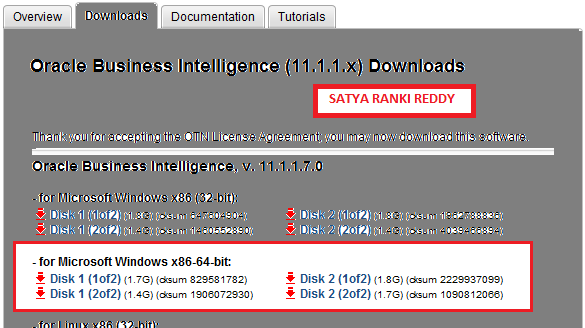


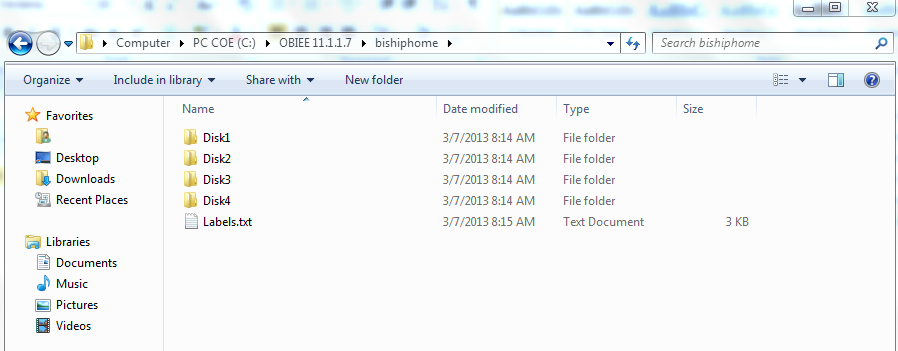
once you complete the download the downloaded files will stored like below root structure(note: once complete the download please confirm fully downloaded double check this size sometimes the network problem it may be corrupted.


Java download:
http://www.oracle.com/technetwork/java/javase/downloads/jdk7-downloads-1880260.html

I just download jdk-7u21-windows-x64.exe 64bit version

And then installed jave like below path
C:\Java\jdk1.7.0_21\ bin
C:\Java\jre7 \bin
System Requirements:

System Configuration:

Windows 7 Home Premium/Ultimate/Professional Edition
System Type: 32/64 bit operating system
Disk Space 20GB or higher
Physical Memory Min 4GB and above
Temp Space 1GB
Swap Space 3GB
CPU & Processor: Intel dual-core i3/i5/i7 64 Bit, 2.10GHz or greater
Internet Explorer 8 or Google chrome/Mozilla/firebox etc..

Other Requirements

Environmental Variables TEMP and TMP (make sure this root folder should not keep any space)

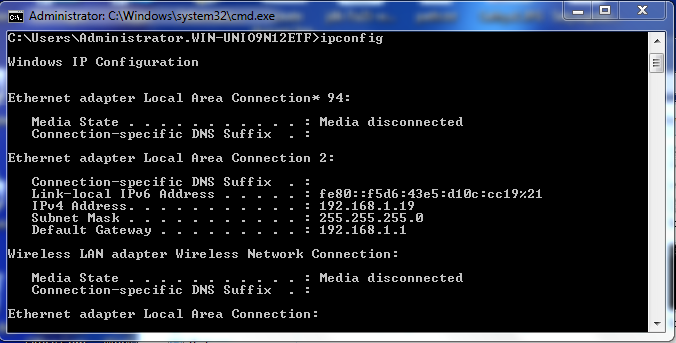
Install Loopback Adapter with Static IP AddressNote: hots/host/etc file the static ip should be set like below
http://satyaobieesolutions.blogspot.in/2012/06/obiee-11.html

# localhost name resolution is handled within DNS itself.

192.168.19 localhost satya-PC
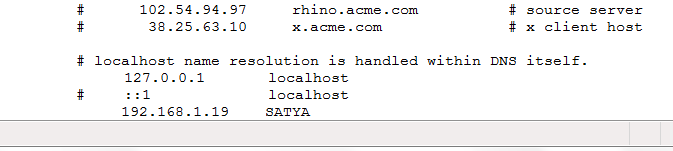

(IP address host domain name host/computer name)


JDK 7 version (64bit)
Adobe Flash Player 10 and above
Oracle Database 11.1.0.7.0 or higher


WebLogic Installation:

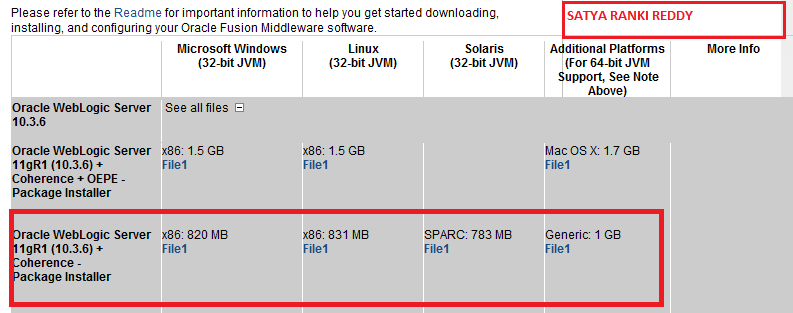
Web logic 10.3.6.0 64bit download and kept it like below path (u can also use web logic 10.3.5 but you to install jdk 1.6)

Note: weblogic 10.3.5 jdk 7 not supported.
you can download weblogic 10.3.5/6 by using below screen,
http://www.oracle.com/technetwork/middleware/ias/downloads/wls-main-097127.html

D:\OBIEE111170\wls1036_generic.jar

Web logic 10.3.5/6 64bit installation must run like below

go --> windows --->type run ==> cmd prompt -->
Microsoft Windows [Version 6.1.7601]
Copyright (c) 2009 Microsoft Corporation. All rights reserved.
C:\Users\satya>cd..
C:\Users>cd..
C:\>cd C:\Java\jdk1.7.0_21\ bin
C:\Java\jdk1.7.0_21\ bin >java -D64 -jar D:\OBIEE111160\wls1036_generic.jar
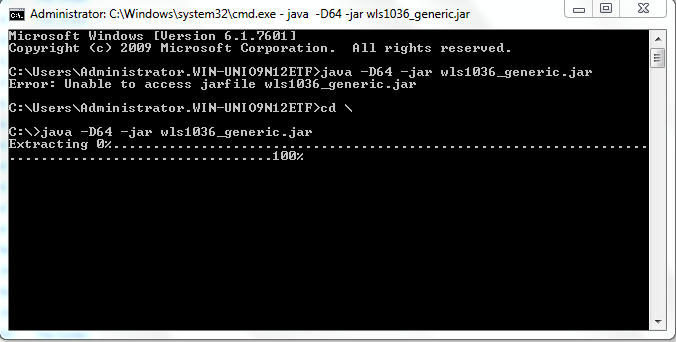

Note: weblogic 10.3.6 64bit installtion u need to use above command.

Weblogic 10.3.6.0 64 bit installation steps on windows 7:

click next and select Middleware (weblogic server) installation drive (note:make sure you have 20GB free hard disk space )

click next


click next and select no ,


 uncheck and click next,


uncheck and check configuration this machine,


just select installtion type as "typical" by this step u can install selective weblogic installation settup files.


if its correctly pointing java path then its automattically picked up here..


 just click next and...


 next....


 finish installation completed...


RCU 11.1.1.7.0 Installation Step


just go to you rcu downloaded path ...


D:\OBIEE111170\rcuHome\BIN\rcu.bat and run as Administrator the select radio button as create..like below screen...


RCU installation please refer my blog.


OBIEE11.1.1.7.0 Software Only installation type on windows 7 64bit 


Go to you obiee11g download saved file path mine is like below C:\OBIEE111170\bishiphome\Disk1\setup.exe run as administrator and click next...


click Finish...


OBIEE11.1.1.7.0 Configuration Steps:


click next ...C:\Oracle\Oracle_BI1\bin\config.bat and run as "Adminstrator"


Here you have give weblogic username password.

Note: Please remember this username and password.


Don't change any thing here. Please keep it as default.


RCU username and password you have to specify here.


For check the Bi Components status via OPMN Command..

All the services are running or not.

 Good Luck!!!!!

Thanks,
Satya Ranki Reddy


OBIEE 11.1.1.7.0 Writeback Insert


OBIEE 11.1.1.7.0 Write back Insert implementation step by step


I have seen several posts for write back insert implementation on OBIEE 11g. Here am providing step for write back implementation.

created table 

create table POLICY_DETAILS
(  POLICY_ID NUMBER(10),
  LOB       VARCHAR2(20)
)tablespace USERS
  pctfree 10
  initrans 1
  maxtrans 255
  storage
  (
    initial 64K
    next 1M
    minextents 1
    maxextents unlimited
  );


I have inseted one null record in database look like below.

Insert into policy_details (LOB,POLICY_ID) VALUES (‘NULL’,NULL);


Import Policy_details table into RPD and create Alias for it and join each other using Policy_Id key column


  Uncheck the cacheable option --> physical layer -RPD table(Policy details)


Grant to connection pool permission (read/write) like below.


Make write able on necessary  columns in BMM Layer(Double click on column) like below.

Make sure table permission read and write radio button in presentation Layer.

Double click on the table name in presentation layer(Policy_details) and then click on permissions and then choose Read/Write options for Authenticated User and BIAdministrator,Weblogic.


Note: Must choose Read/Write option for Bi Administrator,Web logic user as well.


And also Double click on the necessary columns and choose Read/Write options in Presentation Layer


Execute Direct DB request access give it required Application roles/users


  Add writeback tag in instanconfig.xml file refer the below,

C:\OBIEE11G\instances\instance1\config\OracleBIPresentationServicesComponent\coreapplication_obips1\ instanceconfig.xml (please take a back and do the changes) 

<LightWriteback>true</LightWriteback>


  Restart all bi components by using OPMN command


Manage Privileges --> grand permission likes below
 
Create Analysis 


Enable Write Back check box on Policy_ID Column properties
It looks like


Edit the table properties and do the below


and save the changes.

 Find the column id reference and note it finally you have to update on your Write Back.xml file

Go to edit analysis then Click on the advanced tab of the analysis


Here under the Analysis XML box we want to note down all the column Id's that we will be using to populate the Write back table with
Make a note of the column Ids for the required columns. These will be used in the WriteBack.xml file after update this you need to restart OPMN Services via opmnctl command


Or 

We can use column positions also like @1 for column1 and so on


Create XML file as below and place it in
C:\OBIEE11G\instances\instance1\bifoundation\OracleBIPresentationServicesComponent\coreapplication_obips1\analyticsRes\customMessages

Note: Need to create custom Messages folder  

file name : WriteBack.xml and kept it below paths

Note :This file name should match the Template Name in Table Properties


C:\OBIEE11G\instances\instance1\bifoundation\OracleBIPresentationServicesComponent\coreapplication_obips1\analyticsRes\customMessages\WriteBack.xml

C:\Oracle\Middleware\Oracle_BI1\bifoundation\web\msgdb\customMessages

<?xml version="1.0" encoding="utf-8" ?>
<WebMessageTables xmlns:sawm="com.siebel.analytics.web/message/v1">
   <WebMessageTable lang="en-us" system="WriteBack" table="Messages">
      <WebMessage name="satyainsert">
         <XML>
            <writeBack connectionPool="Connection Pool">
        <insert>INSERT INTO policy_details (LOB,POLICY_ID) values ('@{c78fe17d55f8c7776}',@{ca4fd81deec1ec920})</insert>
                <update>SELECT NULL FROM DUAL</update>
            </writeBack>
         </XML>
      </WebMessage>
   </WebMessageTable>
</WebMessageTables>


restart bi components (if any changes on your xml file) 
 Login into UI


  Verify  inserting the data in Lob,policy_id column and then click on insert will insert the data into the Database

Note: similarly you can try for Updation/deletion write back comments
Update write back implementation please refer my post.
http://satyaobieesolutions.blogspot.in/2013/03/write-back.html

Hope this help's

Thanks,
Satya Ranki Reddy

Wednesday, May 1, 2013

Write-Back Limitations

Write-Back Limitations OBIEE 11G


Users can write back to any data source (except for an ADF data source) that allows the execution of SQL queries from the Oracle BI Server. As you configure for write back, keep the following limitations in mind:

  • Numeric columns must contain numbers only. They should not contain any data formatting characters such as dollar signs ($), pound signs or hash signs (#), percent signs (%), and so on.
  • Text columns should contain string data only.
  • You can use the template mechanism only with table views and only for single-value data. The template mechanism is not supported for pivot table views or any type of view or for multiple-value data.
  • All values in write-back columns are editable. When displayed in non printer friendly context, editable fields are displayed as if the user has the Write Back to Database privilege. However, when a logical column is mapped to a physical column that can change, the logical column returns values for multiple level intersections. This scenario can cause problems.
  • Any field in an analysis can be flagged as a write-back field, even if it is not derived from the write-back table that you created. However you cannot successfully execute the write-back operation if the table is not write-back enabled. The responsibility for correctly tagging fields lies with the content designer.
  • A template can contain SQL statements other than insert and update. The write-back function passes these statements to the database. However, Oracle does not support or recommend the use of any statements other than insert or update.
  • Presentation Services performs only minimal validation of data input. If the field is numeric and the user enters text data, then Presentation Services detects that and prevents the invalid data from going to the database. However, it does not detect other forms of invalid data input (values out of range, mixed text and numeric, and so on). When the user clicks the write-back button and an insert or update is executed, invalid data results in an error message from the database. The user can then correct the faulty input. Content designers can include text in the write-back analysis to aid the user, for example, "Entering mixed alphanumeric values into a numeric data field is not allowed."
  • The template mechanism is not suitable for entering arbitrary new records. In other words, do not use it as a data input tool.
  • Write-back analyses do not support drill-down. Because drilling down modifies the table structure, the write-back template does not work.
Thanks,
Satya Ranki Reddy